
SCIENCE
CerFlux science advances human-relevant New Approach Methodologies (NAMs) that combine biomimetic engineering, microphysiological systems, and high-throughput ex vivo and in silico (computational and AI/ML) tumor models to better understand how individual tumors respond to therapy before treatment begins.
This page highlights peer-reviewed publications, high-impact conference abstracts, issued patents, and funded research that underpin platforms such as POET, BEST, SMART, and Lab-on-a-Brane technologies. Together, these efforts reflect a commitment to building human-relevant technologies that support more informed, patient-specific decision-making across translational cancer research and development.
TME-informed bioprinted 3D tissue model as used to characterize architecture-associated drug uptake and response in PDAC
Mahmoud, A; Budhwani, BK; Budhwani, KK; Jones, NR; Krebs, CM; Buchsbaum, DJ; Clark, MG; Budhwani, KI.
Abstract | Journal of Clinical Oncology | 2026 | DOI: 10.1200/JCO.2026.44.16_suppl.4220

Pancreatic ductal adenocarcinoma (PDAC) therapeutic failure is strongly shaped by a collagen-rich desmoplastic ECM that restricts diffusion and limits effective drug delivery: features that 2D models often miss. We used quantitative, spatially resolved mapping of primary human PDAC to characterize intratumoral collagen architecture and then configured a TME-informed 3D bioprinted ex vivo slice tissue (BEST) PDAC model to reflect those structural constraints. Compared with matched 2D cultures, the 3D BEST models showed delayed drug uptake and attenuated response dynamics consistent with diffusion-limited transport, while 2D systems showed faster uptake and higher apparent potency. This NAMs-aligned framework links TME architecture to model configuration to improve translational fidelity and therapeutic prioritization in desmoplastic tumors.
Characterizing spatial tumor architecture and ECM recapitulation using an EO771 syngeneic TNBC model
Boykin, LA; Budhwani, KK; Budhwani, BK; Garner, ML; Nataraj, S; Crawford, C; Sorace, AG; Budhwani, KI.
Abstract | Journal of Clinical Oncology | 2026 | DOI: 10.1200/JCO.2026.44.16_suppl.e13133

Triple-negative breast cancer (TNBC) shows strong therapy resistance that is increasingly linked to tumor microenvironment (TME) architecture, including extracellular matrix (ECM) composition and spatial organization. We compare ECM patterns observed in patient TNBC with those seen in a widely used syngeneic model to understand where model architecture aligns and where it diverges. Human TNBC exhibited heterogeneous intratumoral collagen and GAG patterns, whereas murine tumors showed more uniform ECM with collagen concentrated at the tumor periphery. The results point to meaningful differences in spatial ECM organization that can change drug transport, tumor–stroma interactions, and downstream interpretation of therapeutic response. These data support a measurable “recapitulation gap” and highlight how spatial ECM mapping can inform model selection/refinement and complement translational research with human-relevant NAMs.
Evaluation of xenograft alignment with patient tumors to inform treatment studies in uterine carcinosarcoma
Dave, D; Arend, RC; Crawford, CL; Segrest, H; Katre, A; Budhwani, BK; Budhwani, KK; Budhwani, KI.
Abstract | Journal of Clinical Oncology | 2026 | DOI: 10.1200/JCO.2026.44.16_suppl.e17647

Uterine carcinosarcoma (UCS) is an aggressive malignancy where accurately modeling patient tumor architecture is essential for interpreting treatment studies. We generated patient-derived xenografts (PDXs) from six UCS surgical specimens and compared primary tumors to matched PDXs using dual collagen and hyaluronic acid staining plus quantitative spatial/texture metrics (ECM area fractions, HA:collagen ratios, GLCM texture features, Moran’s I) and multivariate PCA. Most patient tumors showed significantly higher collagen area fraction than matched PDXs, while PDXs exhibited stronger ECM clustering and reduced spatial heterogeneity. These stromal and architectural differences underscore the need for careful model selection, and our ongoing development of patient-derived 3D organoids aims to better preserve UCS features relevant to chemotherapy response.
Bridging the Translational Gap: Critical TME Differences Between Human PDAC and Mouse Models
Guenter, RE; Boykin, LA; Budhwani, KK; Budhwani, BK; Crawford, CL; Rose, JB; Budhwani, KI.
Abstract | Cancer Research | 2026 | DOI: 10.1158/1538-7445.AM2026-763
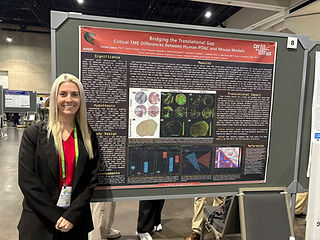
This poster presented at the 2026 Annual Meeting of the American Association for Cancer Research (AACR) compares tumor microenvironment (TME) features in human pancreatic ductal adenocarcinoma (PDAC) versus commonly used mouse models to identify differences that may explain translational gaps. It focuses on how microenvironmental composition and spatial organization can affect drug delivery, response, and interpretation of preclinical results.
By benchmarking human-versus-model TME characteristics, the poster outlines practical signals for selecting and refining models to better reflect patient biology. In short, it points to why “model choice” can be a therapeutic variable in desmoplastic tumors like PDAC. Overall, it supports more human-relevant model evaluation for translational oncology.
Spatial ECM Remodeling Reveals Translational Drift Between Patient Tumors and Matched PDX Models in Endometrial Cancer
Dave, D; Arend, RC; Crawford, CL; Mahmoud, A; Budhwani, BK; Budhwani, KK; Segrest, H; Katre, A; Guenter, RE; Budhwani, KI.
Abstract | Cancer Research | 2026 | DOI: 10.1158/1538-7445.AM2026-2616

This poster presented at the 2026 Annual Meeting of the American Association for Cancer Research (AACR) examines how spatial extracellular matrix (ECM) remodeling can create translational drift between patient tumors and their matched PDX models in endometrial cancer. It highlights tumor microenvironment (TME) features that may be preserved - or altered - in ways that can influence how therapies behave in models versus patients.
Overall, it emphasizes TME-aware model benchmarking to improve translational confidence. The broader takeaway is that cell-intrinsic evlauation isn’t always enough; spatial ECM context can meaningfully change the experimental answer. By making ECM remodeling a first-class variable, the work supports more reliable interpretation of preclinical efficacy studies.
Evaluation of a Novel Pan-RAS Inhibitor in 3D Bioprinted Tumor Models
De Nobrega, D; Eiler, LC; Ahirwar, P; Nallapu, S; Rawal, UP; Crawford, CL; Buchsbaum, DJ; Keeton, A; Maxuitenko, YY; Chen, X; Piazza, GA; Tsung, A; Budhwani, KI.
Publication | Cancers | 2025 | DOI: 10.3390/cancers17182958

Bioprinted 3D tumor models are an innovative approach that replicates the structure and environment of real tumors, offering an alternative to animal models for testing new drugs. In this study, we employ these models to evaluate a novel inhibitor targeting RAS proteins, common drivers of many cancers. By recreating the complex architecture of tumors in the laboratory, we demonstrate that this compound selectively eliminates tumor cells harboring RAS mutations while sparing cells without these mutations. Our work highlights the promise of 3D bioprinted tumor models for guiding drug development and advancing treatment strategies for cancers driven by RAS alterations.
Keywords: new approach methods; drug discovery; 3D bioprinting; colorectal cancer; RAS mutations; pan-RAS inhibitors; ex vivo tumor models
The Scienthetic Method: From Aristotle to AI and the Future of Medicine
Budhwani, KI.
Publication | British Journal of Cancer | 2024 | DOI: 10.1038/s41416-024-02841-1

While AI holds immense potential for accelerating advances in oncology, we must be intentional in developing and applying these technologies responsibly, equitably, and ethically. One path forward is for cancer care providers and researchers to be among the architects of AI and its adoption in medicine. Given the limitations of traditional top-down, hypothesis-driven design in an exponentially expanding data universe, on one hand, and the danger of spiraling into artificial ignorance (ai) from rushing into a purely ‘synthetic’ method on the other, this article proposes a ‘scienthetic’ method that synergizes AI with human wisdom. Tracing philosophical underpinnings of the scientific method from Socrates, Plato, and Aristotle to the present, it examines the critical juncture at which AI stands to either augment or undermine new knowledge. The scienthetic method seeks to harness the power and capabilities of AI responsibly, equitably, and ethically to transcend the limitations of both the traditional scientific method and purely synthetic methods, by intentionally weaving machine intelligence together with human wisdom.
Efficacy assessment of a novel pan-RAS inhibitor in KRAS-mutant and wild type colorectal 3D bioprinted organoid tumor tissue
Ahirwar, P; Charania, AA; Zuaiter, DR; Eiler, LC; Nizamuddin, A; Crawford, CL; Maxuitenko, YY; Piazza, GA; Budhwani, KI.
Abstract | Journal of Clinical Oncology | 2024 | DOI: 10.1200/JCO.2024.42.23_suppl.91
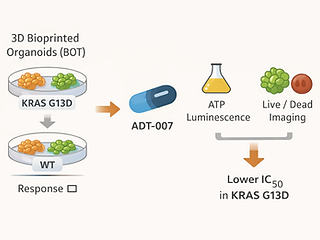
This ASCO meeting abstract evaluates ADT-007, a novel pan-RAS inhibitor, using a high-throughput ex vivo platform with 3D bioprinted organoid tumor (BOT) tissue models of colorectal cancer. The team generated BOTs from a KRAS G13D–mutant CRC cell line (HCT116) and a wild-type CRC line (HT29) and measured drug response via ATP luminescence plus high-content live/dead imaging. In these BOT models, ADT-007 showed a lower IC₅₀ in KRAS-mutant tissue than in wild-type tissue, consistent with separate in vitro/in vivo observations. The authors conclude that broadly acting pan-RAS inhibition, paired with BOT-based testing that better captures tumor microenvironment features, may help assess efficacy across RAS-driven cancers beyond a single KRAS allele.
Assessment of KRAS G12C inhibitors for colorectal cancer
Piazza, GA; Chandrasekaran, P; Maxuitenko, YY; Budhwani, KI.
Publication | Frontiers in Oncology | 2024 | DOI: 10.3389/fonc.2024.1412435

Colorectal cancer (CRC) is a common and often lethal cancer worldwide, and roughly 45% of CRC tumors carry activating KRAS mutations. KRAS is the most frequently mutated oncogene in humans (implicated in ~25% of all cancers), and these mutations can lock KRAS “on,” driving MAPK/AKT signaling that promotes uncontrolled growth, survival, and other features of malignancy. Although KRAS was long viewed as undruggable, the FDA has now approved two direct KRAS inhibitors—sotorasib and adagrasib—that covalently inactivate KRAS^G12C. These agents have shown meaningful benefit in KRAS^G12C-mutant NSCLC, but they’ve been far less effective in CRC, for reasons that remain incompletely understood. Because similar limitations may affect other mutant-specific KRAS inhibitors in development, it’s critical to understand the biologic basis of resistance. This review summarizes clinical trial results of KRAS^G12C inhibitors in CRC (as monotherapy and in combinations), outlines mechanisms that drive resistance, and discusses emerging RAS-targeting strategies designed to overcome or bypass these resistance pathways.